Welcome to the PCI Security Standards Council’s blog series, The Quantum Leap: Preparing for Post Quantum Cryptography. This special, ongoing feature of our PCI Perspectives blog offers a resource for payment security industry stakeholders to share information about how they are taking steps to ensure their systems are crypto-agile into the future.
Quantum computers are computing systems that operate in very different ways to classical computers, using quantum bits (or ‘qubits’) rather than the classical ‘bits’ of an existing computer. Quantum computing threatens some forms of cryptography, as it allows for operations that are not possible with traditional computing systems and therefore were not considered threats when creating traditional encryption algorithms. As continual progress is being made on quantum computers, it is generally expected to be only a matter of time before ‘cryptographically relevant quantum computers’ (CRQC) can be used to attack some of the widely deployed cryptographic systems used today.
In this edition of The Quantum Leap, Verisec Product Owner 10XPay, Aidan Corcoran, offers insight into how his company is preparing for migration to post-quantum cryptography, the challenges our industry faces, and advice for maintaining strong cryptography practices to protect the future of payment security.
What steps is your organization taking to prepare for a migration to post-quantum cryptography? If it is too soon yet to address within your environment, what will the catalyst be for action?
Verisec is already actively preparing for the transition to post-quantum cryptography.
With 10XPay, we are well advanced with TLS 1.3 and related post-quantum cipher capabilities, while continuing to strengthen crypto agility across the platform and in our HSM, PKI, cloud, and software environments.
Our objective is to be technically ready to move as the standards and wider payment ecosystem mature, rather than waiting for a future deadline to start preparing.
Recent announcements from the card brands recommending adoption of AES for EMV card processing by 2030 is the first big cryptographic change since the introduction of 3DES. We are ready for this change. We have to remember that with more than 15 billion EMV cards in people’s pockets and maybe as many as one billion acceptance devices, that’s a lot of things to update in the next few years.
What kind of previous impactful technological change or business shift would you compare to quantum computing?
Quantum computing itself brings the capability to increase significantly computing power and performance. From a business perspective, we might see a similar impact on the move from fax machines to email.
We have the potential to see AI, quantum computing, and cloud combine together to deliver an extremely powerful set of business tools. The cloud provides an agile environment to respond to this technological change.
I remain excited to see what innovations come from these exciting building blocks over the coming years.
What aspect of migrating to post-quantum cryptography do you see as being the most challenging?
After many years in the payments test tool business, interoperability is a passion of mine. The industry needs to overcome the challenge of updating billions of EMV cards and hundreds of millions of devices and still ensure we deliver the seamless cardholder experience we have today. It would be regrettable to have technical acceptance issues for cardholders, such as a payment card and the acceptance device not having matching cryptographic capabilities (such as DDA/CDA or XDA).
The rollout of the C-8 contactless kernel will be an early indication of how successful we are at ensuring a seamless experience at the POI when introducing major cryptographic changes.
For an organization that hasn’t started this effort yet – what are your initial recommendations for designing a readiness strategy?
There is a lot to think about as we look at cryptographic change. I recommend working with internal teams to understand the existing infrastructure, the age, and reach of the current cryptographic systems within the organization.
It may be the case that systems previously considered out of scope may be considered at risk due to harvest now, decrypt later attacks. Knowing what you have makes it easier to know what steps are required to move forward to a PQC future.
A business can rely on trusted partners, their card brand relationships, PCI SSC, and other regional and international forums.
How do security professionals and cryptography teams need to position the PQC-readiness needs and priorities to the C-Suite and Boardroom?
PQC needs to be positioned to the C-Suite and Board as a business resilience and continuity issue, not simply a cryptography or a technology upgrade.
The focus should be on understanding potential business impacts such as service disruption, costly last-minute technology changes, compliance exposure, or risks to customer trust.
The objective is to build crypto-agility and a realistic migration plan early enough to manage the transition without disrupting the business.
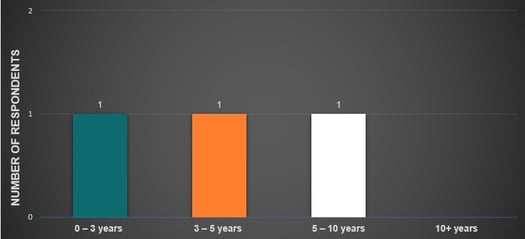
There are a lot of different opinions on how soon it will really be necessary to complete the migration to PQC, which brings us to our poll (no wrong answers here!) – when do you think we will see RSA2048 bit demonstrably broken by a quantum computer?
For more information on strong cryptography and key management best practices, see PCI SSC’s Cryptography Guidance document, available for download in the Document Library.